Unused and unremarkable stuff–a chair with a broken leg, soccer team trophies, a third-grade geography report–is crammed into our attics or lurking on our bookshelves. We need to clean it up or clear it out. If we don’t, it will eventually fall to our kids to do it, and they won’t know treasure from trash.
We know this. At least our minds do. (See my blog for tips on downsizing stuff) And yet, tips be damned, we cling to our belongings, even the outdated skis and the chipped vase.
The question is, why can’t we get rid of that stuff?
Enter neuroscience. The answer is, it’s all about how our brains work.
- Writing in an OPED in the NYTimes, Emily Falk, the author of “What We Value: The Neuroscience of Choice and Change, reassures us that “It isn’t irrational to have trouble letting objects go. The parts of our brain that help us decide what is valuable overlap with the parts that keep track of what feels like us.”
- What this means is that “we feel that what is ours is good, and we increase the value we attach to objects, ideas and behaviors from our past.”
Okay. So what can we do about our counterproductive brains?
- Falk suggests thinking about the downsizing transaction not as a seller (the person giving away the object) but as a buyer (the one getting the object).
- “Instead of asking as a seller, ‘Do I want to keep this?’ we might ask, ”Would I buy this today?’ Modifying the decision-making framework allows a neural calculation in reward and self-relevance systems to shift, too. A teakettle becomes something you can choose — or not — rather than something you stand to lose.
Nobody said this would be easy.
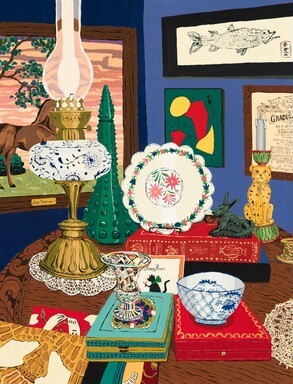
painting: Hilary Precis, “Flea Market”


Leave a Reply