PenPenWrites

parenting blog, memoir notes, family punchlines & more

© Penelope Lemov and Parenting Grown Children, 2025. Unauthorized use and/or duplication of this material without express and written permission from this site’s author and/or owner is strictly prohibited. Excerpts and links may be used, provided that full and clear credit is given.

  • PARENTING GROWN CHILDREN: The children may be grown but we still have our issues.

    B chair

    He's a health and science reporter for the New York Times and was recently awarded the 2020 John Chancellor Award for Excellence in Journalism by the Columbia Journalism school.

    All  that background noise is by way of saying that in an interview with a fellow New York Time's reporter, Donald McNeil put the current sorrows over curtailed Thanksgiving dinners in perspective:

    The holiday season is just around the corner. What advice do you have for families eager to celebrate with their loved ones?

    Do it by Zoom. Don’t let Junior come home and kill Grandma. Think of this like World War II — our soldiers didn’t get to fly home to eat turkey. My father was at Normandy. My mother was with the Red Cross in occupied Austria. They missed the holidays. Life went on. There were happier years later.

    painting: Rebecca Lemov


  • PARENTING GROWN CHILDREN: The children may be grown but we still have our issues.

    Tiny owls by palo

    The coronavirus has been novel in more than it's medical/scientific ways. There's also been a behavioral effect: Our grown kids are parenting us–or trying to.  They are not only worrying more intensely about our health and well-being but setting down guidelines for how we should take care of ourselves–what we should and should not do on a day to day basis.

    One friend, who babysits for her toddler and infant grandkids three days a week, has been told by her daughter that she cannot sit outdoors at coffee shops or restaurants or otherwise socialize in person with friends. Her daughter has also forbidden her to see her dentist or go to supermarkets–the daughter shops for her and drops the groceries and other supplies at her door. My friend, who has no underlying health issues (except for being 71) doesn't want to give up her babysitting gig so she has taken her daughter's orders seriously and kept away from all of us.

    The situation is understandable in that the daughter, who works in a downtown office three days a week, is doubling down to make sure the virus is not brought into her house. But sometimes our children overstep the mark and we need to assert our independence.

    Carolyn Hax column carries a case in point of how some of grown kids try to control their parents' lives–or parts of it. It's not related to Covid rules but the situation applies.

    A woman wrote to Hax to say that after her children and grandchildren moved far away she went through a difficult period. but now has a very busy life that is filled with responsibilities to others. One of her children insists her mother get away for the winter and has rented a place for her in a sunny clime–all expenses paid. The mom doesn't want to be away from her new life for such a long period of time. She wants to know how to say no to a "beautiful offer"without antagonizing a daughter who is " not one to take "no" for an answer."

    Some highlights from Carolyn's answer:

    The only way to go about refusing her offer is to just refuse the offer. That’s it. Prepare yourself beforehand to ride out the drama-storm that ensues.

    Now, all this having been said: You do note that “I really don’t want to leave . . . for so long.” Is there a period you would be eager to spend in this sunny clime? If so, then you can also say, “I’m sorry, I cannot accept two months. A week, however, would be lovely. Let me know if that’s possible.”

    Say this only if you trust yourself to hold that line. Otherwise don’t even suggest it — just stick to the “no.”

    And if/when she flips out on you, remain calm: “This is not up for negotiation. Let’s either change the subject now or talk another day.” Be ready to hang up as needed. “I’m interrupting you, hang on — I’ve got to go, bye.” Click.

    I know this probably looks/sounds terrible, but it’s not unkind. It’s letting an emotional trespasser know she needs to get back on her side of the fence.

    photo: Palo Coleman


  • PARENTING GROWN CHILDREN: The children may be grown but we still have our issues.

    VGogh reading book

    Thanksgiving is only one of the family get-togethers upended by the coronavirus. Summer vacations, family reunions, birthday celebrations, Father's Day, Mother's Day, even funerals–lots of us have been unable to celebrate or observe any of these in person with our children (and their families) since the coronavirus barged into our lives.

    How are we coping with these losses? Some of us are more philosophical than others. Many of us are taking it one holiday at a time or thinking up innovative ways to use technology to shrink the distance.

    Here's how one couple is dealing with the loss of an annual Father's Day reunion with their four grown children. The full interview ran in the New York Times. Here are pertinent highlights.

    The situation: 

    Every Father’s Day weekend, the four adult children travel from New York and Chicago to Las Vegas to visit their father, Mort, 82, and stepmother, Marla, 65, bringing with them grandchildren ranging in age from 7 to 20 years old. The annual ritual was postponed this year until August. And then, as the virus continued to rage, it was canceled.

    How the parents are coping:

    Mort I happen to like my family. But I’m not insane enough to risk death. The coronavirus is unfortunately dictating our schedule. You recognize what is possible and what is not possible.

    Marla We tell them, ‘Well, maybe you’ll drive out here.’ But the truth is, as much as we’d love to see them, they have too much contact with too many people.


    Mort I’m not going to rend my garments and cover up the mirrors because I can’t see my children. I’m lucky to be in sufficiently good health. …

    Marla I worry that the young ones are too young to have formed memories of him. And the ones in college — who knows how much longer they’ll want to come along on these visits?

    Mort My grandchildren are in very good hands.

    Marla We’re lucky, we have each other. But it feels like we’ve given up a tremendous amount during this time.


    Marla He might come off as ‘it is what it is,’ but would he love to see them? Nothing would make him happier. [One of his children] said, ‘When am I going to see you?’ I said, ‘When there’s a vaccine.’

    Marla And when will that be? I don’t know. I don’t know, and there are days I handle it much better than others.

    painting: Van Gogh

  • PARENTING GROWN CHILDREN: The children may be grown but we still have our issues.

    Boating party

    Two more children have tested positive for Covid-19 at  a granddaughter's high school. Where there were none, three have come up positive at my grandson's college. Small numbers. Controls are in place. Not to worry. But my daughter-in-law sends me these reports–"Sheesh" she texts–to confirm how correct we were to cancel the three-family Thanksgiving get-together we usually have at her house.

    I am probably full of more longing to be together for the holiday than my children and grandchildren are. That is why I have taken on the task of figuring out ways to have Thanksgiving together even if we aren't physically together.

    A friend says she's asked her son-in-law, who's an outgoing person who runs large meetings as part of his job, to be an EmCee on a Zoom call. She wants him to keep it light and fun for six adults and five grandchildren who are spread out across the country. She figures thirty or forty minutes should be enough to make it a memorable Thanksgiving.

    I'm thinking of asking my son, who has a robust Zoom account through his job, to set us up in 5-minute chat rooms where two or three of us can talk directly to each other and then reset the chat rooms so we can talk to others.

    My daughter thinks it would be fun for everyone to sit down for dessert together via Zoom. We could even expand that further–to baking dessert "together" earlier in the day. We could watch a cooking clip and make the same recipe — texting to compare notes and challenges. I haven't checked this out but I understand Netflix has a “party” function that allows you to sync up your streaming and provides a group chat for gabbing. For me, Thanksgiving is more than the meal. It's also about the time I spend in the kitchen with the other family cooks–chopping onions, mixing batters and talking about everything and nothing.

    If some or all of your grown children and grandchildren live nearby, you can organize a meal exchange. This NYTimes story  details how to add recipe links to a shared spreadsheet, sign up for dishes and deliver the goods. The spreadsheet helps keep everything organized so, as the reporter points out," no one accidentally makes the same dish twice–though too much stuffing is never a bad thing."

    Anyone out there have any other bright ideas? Email me or post them as a comment. We're all in this together–trying to savor the joy of the holiday and still stay safe.

    AND: Don't forget to vote, if you haven't already.

    painting: The Boating Party,  Renoir


  • PARENTING GROWN CHILDREN: The children may be grown but we still have our issues.

    Thanksgiving-turkey-illustration

    My neighbor Lisa has made her Thanksgiving plans. Her mother and her two grown children live in a town that's a six hour drive north from her home. For the holidays she has bought–and had delivered to her mother's house–one party tent with roll up sides that can comfortably hold 20 somewhat socially distanced guests plus the two restaurant-caliber outdoor heaters she's purchased. "If it's cold and miserable on Thanksgiving day we'll just postpone the big meal," she tells me, adding her belief that it will be nice at least one day of the long weekend. She and other guests plan to quarantine-light for two weeks before Thanksgiving. Lisa, who works for a health-care company, believes her plan is solid: an outdoor Thanksgiving dinner with flexibility on the actual date and guests who've taken extra steps to keep coronavirus away from their gathering.

    I have also made my plans. I have called my son and daughter-in-law, who have been hosting our family Thanksgiving for the past decade, and let them know that Paterfamilias and I will not be there. We will not make the 1-hour airplane trip north to their city in upstate New York. It was a tear-inducing call, especially since a grandchild we haven't seen since last Thanksgiving will be returning home from college.

    I am following the dictates of another friend, Jo, whose son is a research scientist at NIH and lives a mere 20 minutes away from her. Although he and his family usually have Thanksgiving at his house, he and his wife won't be doing it this year. He told his mother to wipe the holidays off her calendar–just forget about them. Wait till next year.

    His advice is in keeping with that of NIH's leading virologist and epidemiologist, Tony Fauci. He has reiterated on TV news shows that if we don't "appropriately mitigate the risk of a COVID-19 infection," Thanksgiving festivities could become superspreader events.

    The primary problems, he said, will be small to mid-sized gatherings held indoors with people from out-of-town attending. (That would be us.) Circulated indoor air could easily become a hotbed for virus transmission. The danger is heightened when some of the guests take public transportation like planes to get there. (Again, that would be us.)

    Lest we think Fauci is immune to the deprivations of a no-thanks Thanksgiving, he says his children, who live in multiple different states, will not be returning home for the holiday, out of concern for their father and his age. 

    One size does not fit all. Some lucky folks (and their guests) may live in areas where Covid rates are not on the rise, making it somewhat safer to gather indoors (with social distancing,  masking and open windows, of course). Southern and West Coast states where the weather is milder can avoid the indoor issue.

    Here's how a professor of civil and environmental engineering explains the outdoor advantage:

    If you’re [ourdoors] standing right next to someone else, there won’t be enough time for sun and heat to break the virus down before you breathe it in. But there is enough time for the wind to blow it away.

    And a point on relativity the professor makes:

    Neither “indoors” nor “outdoors” is universally safe. Indoors with a small number of people and a good ventilation system bringing fresh air in at least six times an hour is a different risk than indoors in a large group singing without good ventilation. Outside at a protest, masked up and walking, is a different risk than unmasked and packed side-by-side into a football stadium.

    For more customized advice and guidance on making Thanksgiving plans, here's a link to the CDC's suggestions for celebrating fall and winter holidays during the pandemic.

    Stay safe. And not too sad.

  • PARENTING GROWN CHILDREN: The children may be grown but we still have our issues.

    Wedding_Bruegel__Peasant_-

    In ordinary times, Thanksgiving safety advice starts with the proper way to thaw the turkey. You don't want it to become a salmonella spreader.

    These are not ordinary times. Safety now has to do with keeping the holiday get-together from becoming a Covid superspreader. 

    Many of us have been following solid public health advice from the CDC and NIH's Tony Fauci: We limit our socializing to outdoor spaces where we can rely on breezes to refresh the air around our socially-distanted selves. We wear our masks and keep social, non-family groups to four people–oh, maybe with an occasional one or two more trusted friends or family who have been following the coronavirus rules as well.

    That's what's helped get us out of the house and through the past three or four months without any devastating illness. We're also fortunate that the area in which we live has a low infection rate. That makes us feel safer about running into a Starbucks to pick up a coffee  or a Panera for a sandwich to eat in a park. But does that mean we should feel safe about our traditional Thanksgiving get-together with friends and family?

    The CDC doesn't think so. Its director, Dr. Robert Redfield told an October 13 conference call of governors that the current threat "is actually acquisition of infection through small household gatherings." Then he added his worry about the future: "Particularly with Thanksgiving coming up, we think it's really important to stress the vigilance of these continued mitigation steps in the household setting."

    Outdoor dinners would be a safe work-around. But for those of us in more northerly states, the warm, sunny days are dwindling. Heat lamps could take the chill off a 50- or 60-degree outdoor dinner but the 40s and below are something else. Plus there's rain and snow and other vagaries of late November weather. (Don't rule out hurricanes this year, either.)

    As a Northeasterner whose children live in New England, I figure if there's a family Thanksgiving dinner in my 2020 future it's going to be indoors. But the odds of catching coronavirus are about 20 times higher indoors.

    Is there a way to make Thanksgiving get-togethers safe?

    Here's what I've learned: The two dealmakers (or breakers) seem to be size of the group and infection rate of the community. This informative article in the Atlantic wasn't focused on Thanksgiving directly, but the discussion in it applies to any indoor gathering. It offered this caveat from a medical expert who was in a quandary over what to do about an indoor dinner invitation she had: “It's just too complicated to figure it out on your own.”

    We can try, starting with the simpler point of size: Smaller is better. Not just because it limits the number of people exposed to each other (and everyone they've been exposed to). Fewer people mean we can spread out and keep six feet or more distance while we pop chunks of candied yams, slices of cranberry bread and bites of turkey into our unmasked mouths. Forget about a meal at the dining room table. Think family room or living room with dinner plates on laps. 

    The trickier issue is community infection rate. That is, how many new Covid-19 cases are in your area and the one you're traveling to. Public health experts don't agree on what level or rate makes one place safer than another. Some say safe is a test positivity rate below 5 percent and only 5 to 10 new cases a day per 100,000 people.  A health-policy professor at Harvard, Tom Tsai, peg the latter number slightly higher, at 25 cases per 100,000.

    The real problem is that the numbers are hard to come by. There is no official centralized source. I've leaned on this New York Times daily counter to stay current on where the infection rate is rising or falling. You can poke around the site and get county by county cuurent counts. There are a number of other websites, such as GlobalEpidemics.org, that show the levels of community transmission by county. You definitely want under 5 percent; 1 percent would be beyond good–it suggests the disease is contained.

    Beyond that, we have to trust that others at our dinner are behaving safely as well. We're all trying, but as the Atlantic put it:

    …people generally don’t want to kill their friends and relatives. Most people want to do the right thing. But they can’t do it if they don’t know what it is.

    painting:Peasant Wedding, Pieter Bruegel


  • PARENTING GROWN CHILDREN: The children may be grown but we still have our issues.

    Moodyman bearden

    When economists philosophize, they'll tell you that the young start out liberal and as they gather worldly goods and status they mature into conservatives. In a maxim variously attributed to Winston Churchill, Victor Hugo and a slew of others, the thought bubble goes like this: "Any man who is under 30, and is not a liberal, has no heart; and any man who is over 30, and is not a conservative, has no brains." (A French philosopher put the line of demarcation at 20 years of age!)

    It could also be true, as  two decades of Pew Research Center surveys have found, that generations carry with them the imprint of early political experiences. That is, those of us who came of age during the Truman and Eisenhower administrations (we're now in our 80s or older), have fairly consistently favored Republican candidates, while those of us who turned 18 under Bill Clinton and his two successors have almost always voted more Democratic than the nation as a whole.

    All of which is a long way of saying, it's not unusual for our political alignments to be out of sync generationally.  That's what's led to many an unpleasant political conversation at Thanksgiving dinner. For those of us holding out hope for extended-family reunions around the Thanksgiving table this year, we may find the political divide is not so much generational as geographical. Compounding our differences is the unusual depth of feeling many of us hold about the current political situation and the deep divide between the left and the right. There is no longer any middle ground.

    In a recent blog postingCarl E Pickhardt  writes about young adults and their rejection of their parents' political beliefs–and how hard that can be for parents to bear.

    In these deeply partisan times, how can parents of one passionate political view come to terms with an older adolescent or young adult who is firmly wed to its opposite persuasion?

    How indeed. And the same holds true for aunts and uncles and cousins by the dozens. This year, many of us may easily avoid dinner time chats with relatives with whom we disagree–social distancing and difficult travel protocols may intervene. But that doesn't help when we sit on opposite sides of the political divide with our grown children whom we may see everyday or Skype several times a week.

    When it comes to politics, what does Pickhardt suggest in terms of keeping the ties that bind intact and conversations civil.

    *Rather than treat a political difference as a barrier to getting along and listening with their mind made up, treat it as a bridge, as a talking opportunity to better understand each other. 

    *Rather than take personal offense, respect the individuality and independence of their grown child’s political convictions and the bravery to assert themselves in this displeasing way. 

    *Rather than treat political differences as primary, keep them in perspective as only a small part of a person, and appreciate the abiding commonalities they still share.   

    Solid advice. Good luck implementing it.

    painting: Romare Bearden, Tomorrow I May Be Far Away, 1967, National Gallery

  • PARENTING GROWN CHILDREN: The children may be grown but we still have our issues.

    Pissarro Charing Cross Bridge  London  1890

    I have perfected the fly-by hug. When we finally made our way to the cities where our children live, I found I could not greet them with an awkward elbow flap of a hello. We have not seen in person either our children or grandchildren since last Thanksgiving, I could not deny myself hugs–even if they were quick and fleeting. 

    So I started with my youngest–a 12-year-old. We were standing on the outdoor patio and I told her, "We'll run toward each other, grab a hug with our faces turned away from each other and move on quickly. And so it was with each member of the family. I found it immensely satisfying in a way that's hard to put into words–just to hold, however fleetingly, each precious member of my family was a joy and a reminder of the necessary warmth of physical contact.

    To arrive on that patio we had to get to an airport and board a plane. This felt surprisingly safe. The airport was sparsely populated. Almost all concessions were gated closed. The airport was a depressing ghost town (and a reminder of the hundreds of jobs lost in just this one place). That said, we felt safer for the lack of crowds.

    We flew on Southwest which has promised to control the sale of tickets on each flight to keep middle seats empty. Twas a pleasure not to be crowded in, but it was eerie nonetheless. Southwest also demands passengers wear masks. One man, seated a row in front of me and across the aisle kept taking off his mask. What to do? It made me feel unsafe. I signaled the stewardess and let her handle it.

    When we landed and made our way toward baggage claim we were greeted by the staff at a "health desk." We were asked where we came from. When we said Maryland, a list was checked. "You're Okay," said the health checker. "Welcome to New York State."

    We stayed at a hotel and asked for a room in which no one had stayed the night before. No problem. The half of the lobby where we used to order breakfast in the morning or a drink in the evening was dimmed-light dark with chairs upended on the tables. A gloomy sight. 

    Corona travel hotel

    Our daughter-in-law was concerned about our spending time in her house. (Concerned for us, not for her family.) The grandkids had started back to school,  attending in person classes two or three times a week. That means they were now more exposed to the virus than they had been–a risk for us. Our DIL had planned in advance and borrowed a heat lamp so we could safely eat together outdoors. But a sudden cold spell–40 degrees at night–made sitting outside too chilly, even with the heat lamp. We went inside. Everyone stayed masked except when actually eating. We sat well distanced from each other, plates on our laps rather than on the table.

    Despite the masks (with their muffling of sound) and physical distancing we had a wonderful time talking,  laughing at family stories and catching each other up on individual "adventures." At the same time I felt I was like a squirrel who needed to hoard these moments for a long winter of no visits.

    Two days later we headed an hour east into Massachusetts for a 24-hour visit with our daughter and her family who drove west to meet us. We stayed at a small family-run inn in Great Barrington. Our rooms were the only ones in a small annex where we had a shared communal space. In the evening it was, once again, too chilly (and we were too tired) to try to eat outside. My daughter and I walked into town, picked up two pizzas and a big salad. We all sat in our communal space, dropped our masks to eat our pizza and otherwise stayed safe while we relaxed in each other's company. 

    We are fortunate that both our children live in states (New York and Massachusetts) that have been able to keep the Covid infection rate under control. Our state (Maryland) is improving–we are no longer banned in New York State. Traveling within states that have very low infection rates and are making Herculean efforts to keep it that way made us feel we were taking controlled–and worthwhile–risks in traveling to visit our children. 

    We dare not think ahead to the usual family gathering in Albany for Thanksgiving. Except to  squirrel away the memories of this visit to revisit when the weather turns cold and travel more challenging.

    painting: Pissarro, Charing Cross Bridge, London

  • PARENTING GROWN CHILDREN: The children may be grown but we still have our issues.

    Railway monet
    In August, a friend's daughter and son-in-law drove 10 hours from Boston to Maryland to visit their mom for two days. During the trip they focused on what we all focus on: stop only to gas up and use the facilities; pack the car with travel snacks and soft drinks  plus lots of Clorox-like wipes and hand sanitizer. When they returned home, they took Covid tests.

    Other friends did the reverse trip: They drove 12 hours from Maryland to see their grown children and grandchild in New Hampshire. They stopped en route to overnight at a hotel, picked up dinner from a carry out and limited highway stops to gas and bathroom. They did not get tested but they quarantined-lite when they came home. That is, they stayed home for two or three days–before they got back to their usual routine, which was low risk anyway.

    Now we are planning a trip to see our grown children and grandchildren. We are not driving. Our plan is to cover our faces and fly from Maryland to Albany to see our son's family, drive a rental car into Massachusetts to see our daughter and then reverse ourselves to come home.

    We are lucky in one way: both states we are visiting have very low infection rates.  We are not so lucky in that neither New York nor Massachusetts welcome travelers from Maryland– unless they quarantine for two weeks or, for Massachusetts, have a negative covid-19 test within 72 hours of arrival. The test requirement is a challenge. Rapid result tests are not easy to get in Maryland. Where we live (and where the infection rate is low), we have to be  symptomatic or have been exposed to the virus in order to qualify for a test. It took us more than four hours to set up what we think is going to be a drive-through test that we can use to enter Massachusetts.

    We are not sure now if we New York will allow us to enter. The NYS website tells us that "enforcement teams will be stationed at airports statewide to meet arriving aircrafts at gates and greet disembarking passengers."  We may make our final destination to Massachusetts and ask our son to drive himself and his family an hour east to visit us there. The big risk we  face: Our grandchildren will have started going to school in person. We will have to be extra vigilant around everybody and they around us. My daughter in law says that if the weather turns cold enough to make us uncomfortable to sit outside, we can come into the house and everyone will wear masks, except when we eat and that will not be around the table but scattered 6-feet apart in the family room.

    Then there is the question of what we have to or should do when we return home. Can we just unpack our bags as though this was just another trip to see our children, or should we quarantine? Get another covid test in two weeks?

    This is what the new normal for travel is: Along with arranging transportation, making housing reservations and remembering to pack chargers for all devices, we have to add extra face masks, covid testing and sanitizers to our travel to-do list–and be prepared to quarantine ourselves.

    As to the family visits themselves, we are assured by friends who've driven miles to see their children that even hugless, physically distanced encounters are worth the challenge of dealing with the plethora of pandemic limits.


  • PARENTING GROWN CHILDREN: The children may be grown but we still have our issues.

    Repose john singer sargent

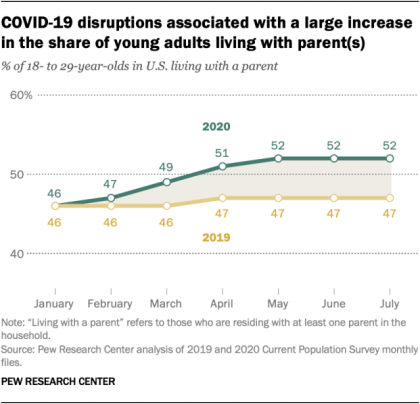
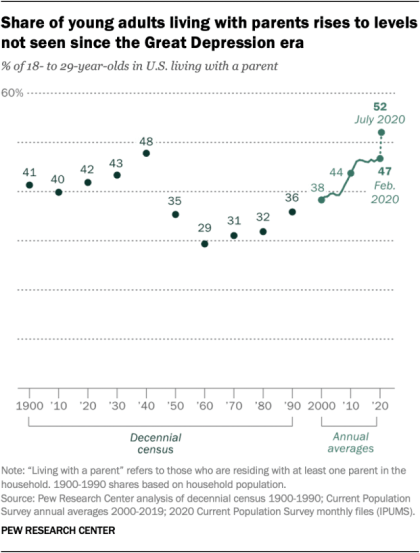
    Back in March, when the coronavirus pandemic had most of us sheltering in place, some of us did so with our grown kids and even grandkids. Where they had been living independently, now they were with us under our roof or we under theirs–or we were within a pod of safe visitors. Who knew the sheltering would last so long or that the promises of aid and assistance–babysitting, room and board–would last so long and be so exhausting.

    What to do about the problems raised by the over-stuffed nest and pledges of commitment to our now too-close loved ones? Our once-quiet, empty nest may now be filled with the chaos of multi-generation visitors. Did we really mean to commit to serving three meals a day to four adults and two children? Or be available to babysit while they worked? Or share our car, cross trainer and bandwidth indefinitely? How do we get our life back when the end to the crisis is no where near? Here are some suggestions from experts quoted in "How to Set Pandemic Boundaries for Relatives," an article that  reminds us that boundaries are necessary even when they may be hard to set and make us feel like we're being a bad parent or grandparent.

    On feeling overwhelmed: Create a list of all of your responsibilities and then identify what you alone can do and what can be outsourced to your "guests." Examples: cleaning the bathrooms; grocery shopping; preparing meals.

    Keep a relaunch in sight: Adult children who are boarding with you may have regressed into  dependency. One expert suggests saying to your child, "We know that you don’t want to be here forever. But what can we think about to give you, and us, a vision for how great it’s going to be for you to feel autonomous and free and empowered?” Tht could be the road to mapping out steps toward a relaunch.

    Renegotiate commitments: Promises were made back in March, before we realized how long the pandemic might last. But a commitment to, say, babysit grandkids when in-person schools closed last spring may no longer be feasible. You are allowed to change your mind, the experts say, offering this suggestion as a way to open negotiations: “Just because we’ve agreed to something in one moment doesn’t mean we’ve agreed to it for life.”

    Clarify your needs: Be clear in your own mind what you’re still willing to do. Let your grown kids know you are still there for them, but within limits. You might reassure them that you've been happy to help so far but "we all thought this would be over by now, and it’s not." Then, the experts say, tell the truth. As in something like this: 

     “‘I can’t be at my best at this level, so I need to cut back’, or ‘I need to take a month off,’ or whatever it is you really need….You let them know, without defensiveness, without guilt, that you want to help them come up with a different solution that works for them, because this one isn’t sustainable for you.’”

    Be true to yourself: There may be an expectation on the part of your grown children that you're going to keep doing this because you're their parent and they need you to do it. Oh the guilt! Here's one expert's suggestion on this point:

    “Ask yourself, ‘Do I want my kids and grandkids to love me because I do something I don’t want to do for them? Or do I want them to love me because I’m honest and I’m being myself?’”

    It ain't easy:

    “Tolerating uncomfortable feelings builds emotional resilience. And standing in our truth is hard, but it’s the key to honest relationships."

    painting: Repose by J Sargent @ National Gallery